Fabronica: An agentic engineering platform for intelligent hardware
Fabronica explores what individuals and small teams could build with the engineering capabilities of a much larger organisation. The vision is an open platform where someone can describe a product they wish existed and work with AI agents to design its mechanical parts, develop its electronics, write its software and prepare it for manufacture. Creators could share a complete project, giving others the design, code and test results they need to understand how it works and adapt it for a different purpose.
- Client
- Fabronica
- Deliverables
- Rust CAD ApplicationGeometry KernelSystem One ModelRobot Vacuum Simulation
- Year
- 2026
- Role
- Founder, Product & Engineering
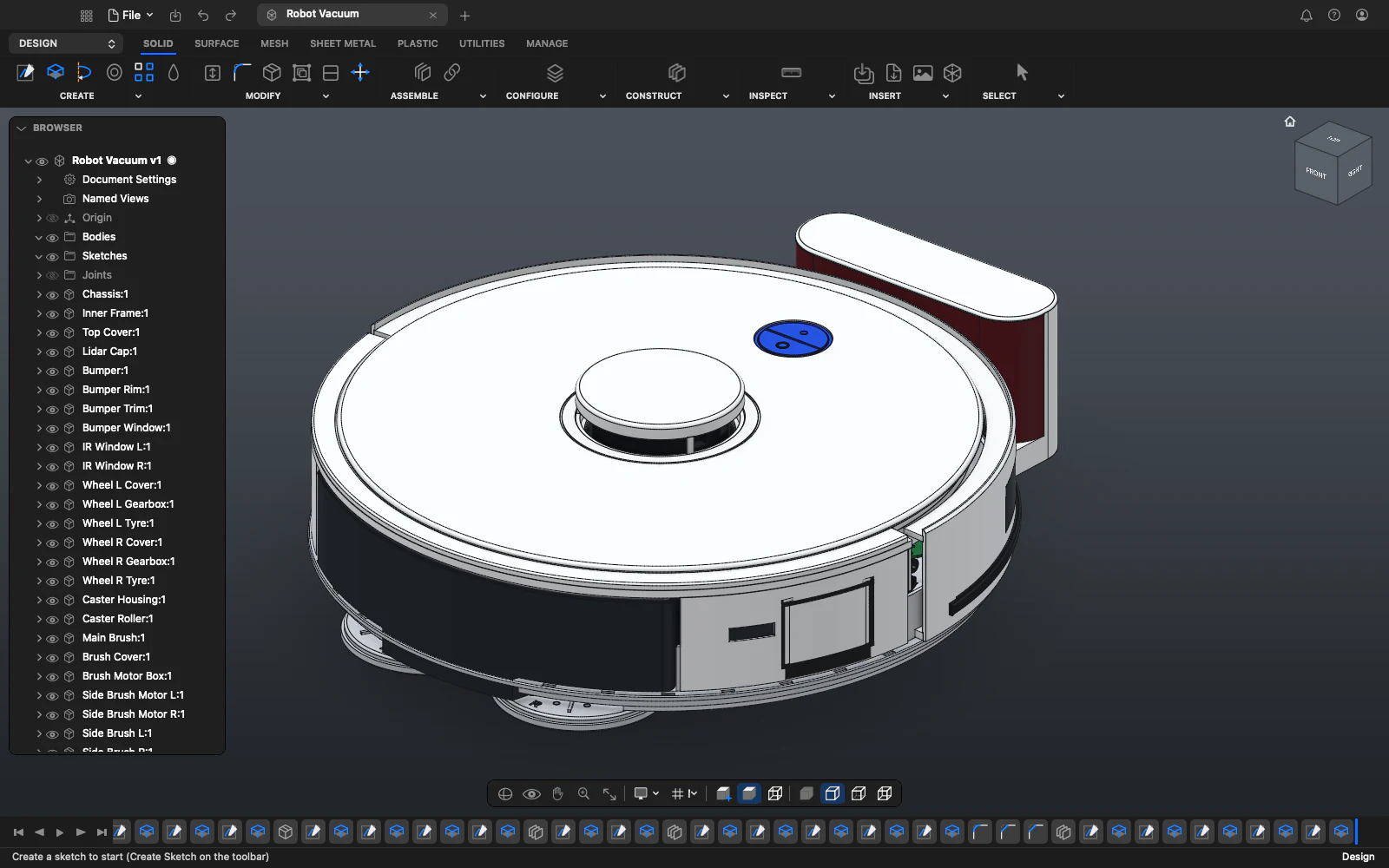
I built Fabronica’s CAD application in Rust, including a geometry kernel developed from the ground up. The kernel gives people and AI agents a common set of tools for creating and modifying parts. By integrating our agentic harness directly into the application, I enabled agents to produce editable designs that a person could inspect and refine.
The wider platform design connected this mechanical work with circuit boards, component selection and firmware. Physics simulation and software emulation each had a distinct role. A physics engine could show how a robot moved or made contact with an obstacle. Emulation would allow its firmware to run against virtual sensors and electronics, so the team could test how the code responded to that encounter.
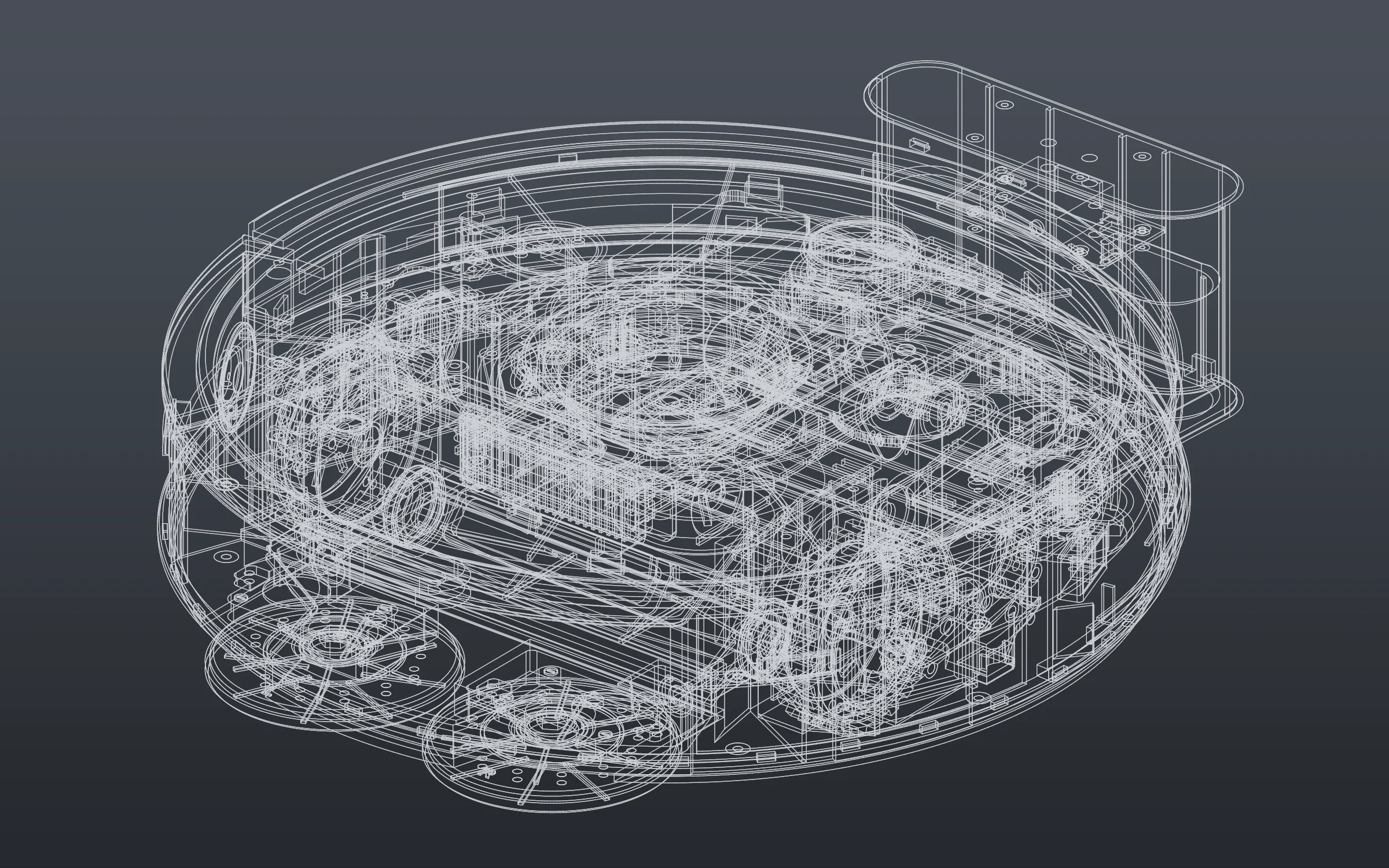
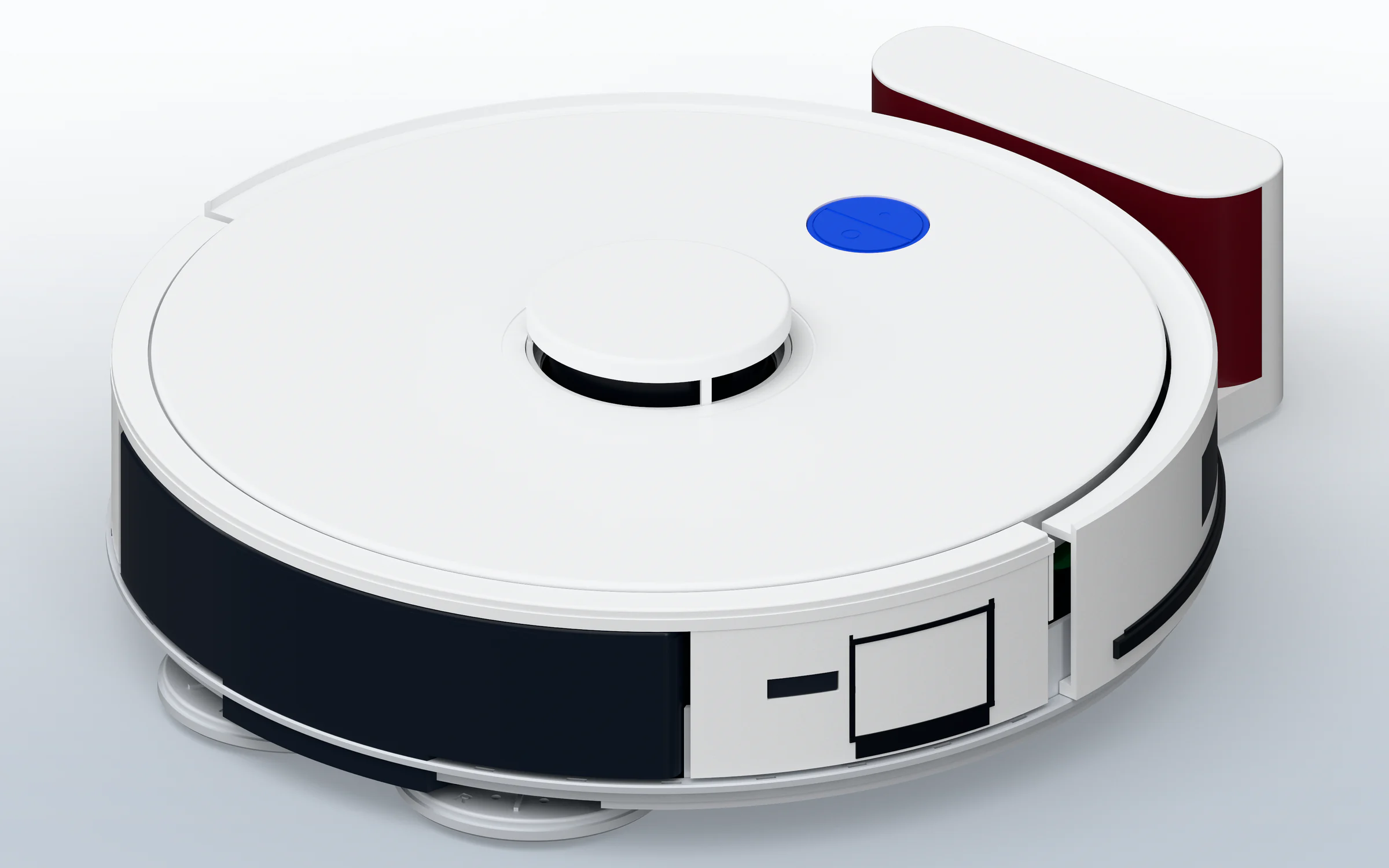
We brought the design and decision-making together in an autonomous robot vacuum. We designed the vacuum in Fabronica and used a physics engine to simulate its movement and interactions. Using simulated scenarios and images from the virtual environment, we trained our own System One model from an open-weight base.
We gave it a specialised job: choose the vacuum’s next action based on what it could observe and what the machine was capable of doing. We then embedded the model in the simulated vacuum, where its decisions shaped how the machine behaved.
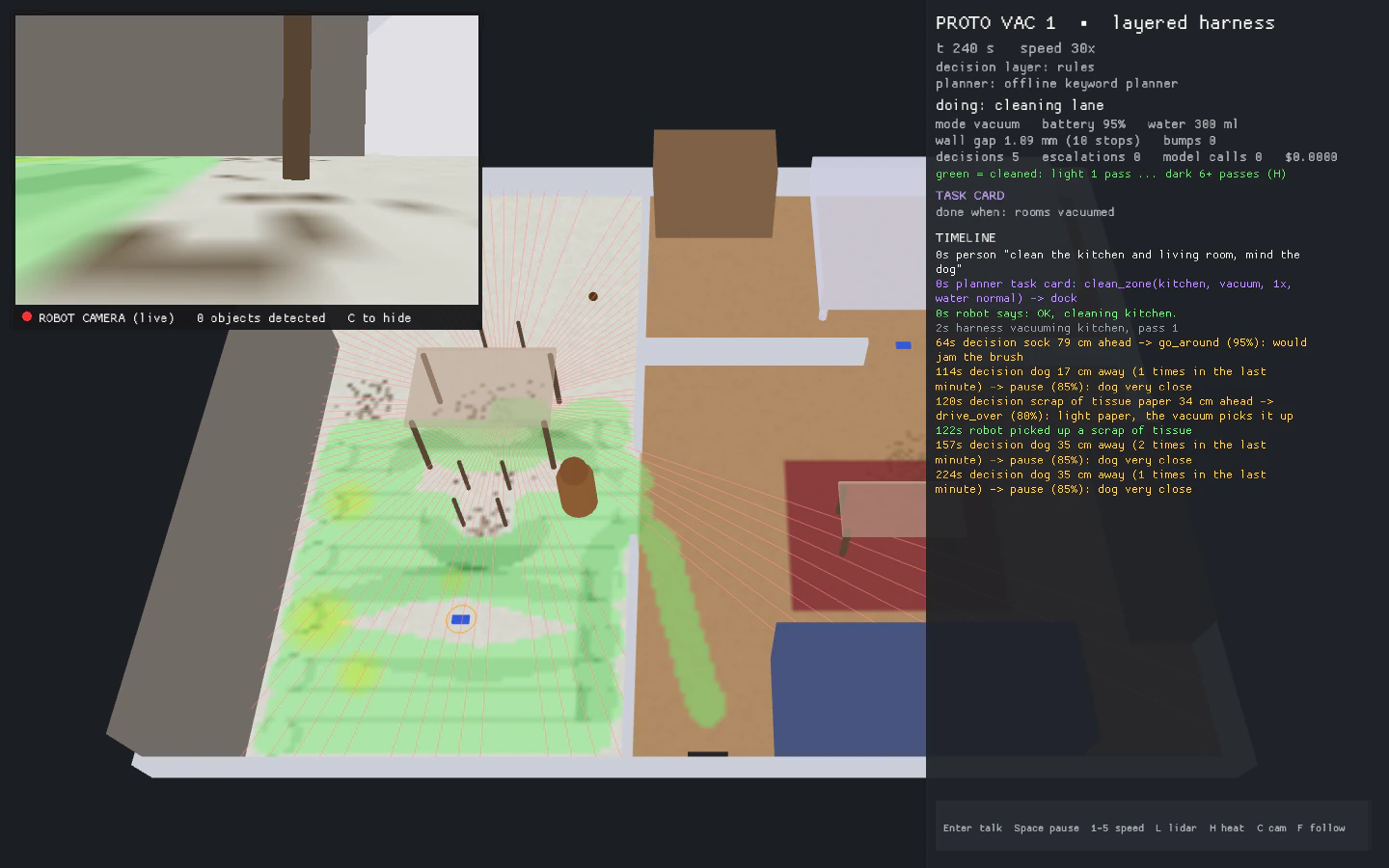
The vacuum made it possible to test a design decision and a behavioural decision in the same environment. Its geometry determined how it could move, the model selected an action, and the physics engine showed the consequence. We could examine that sequence before manufacturing a single part. For a small hardware team, the significance is practical. The shape of a machine and the intelligence that powers it can be developed together, while both are still easy to change.