Synthetic Humans: Photometric–Behavioural Embodiment
Photometric–Behavioural Embodiment is an experimental approach I developed to reconstruct a person’s likeness in motion and conversation. Its premise is that the way light falls across a face reveals its shape and surface, while recordings of speech reveal how that person’s voice, expression and movement relate. The research question was whether those observations could be combined into a digital human that remained recognisably the same person while saying something entirely new.
- Client
- Personal Project
- Deliverables
- Facial Reconstruction PipelineRust Rendering EnginePhonetic EngineConversational AI
- Year
- 2026
- Role
- Research, Engineering & Design
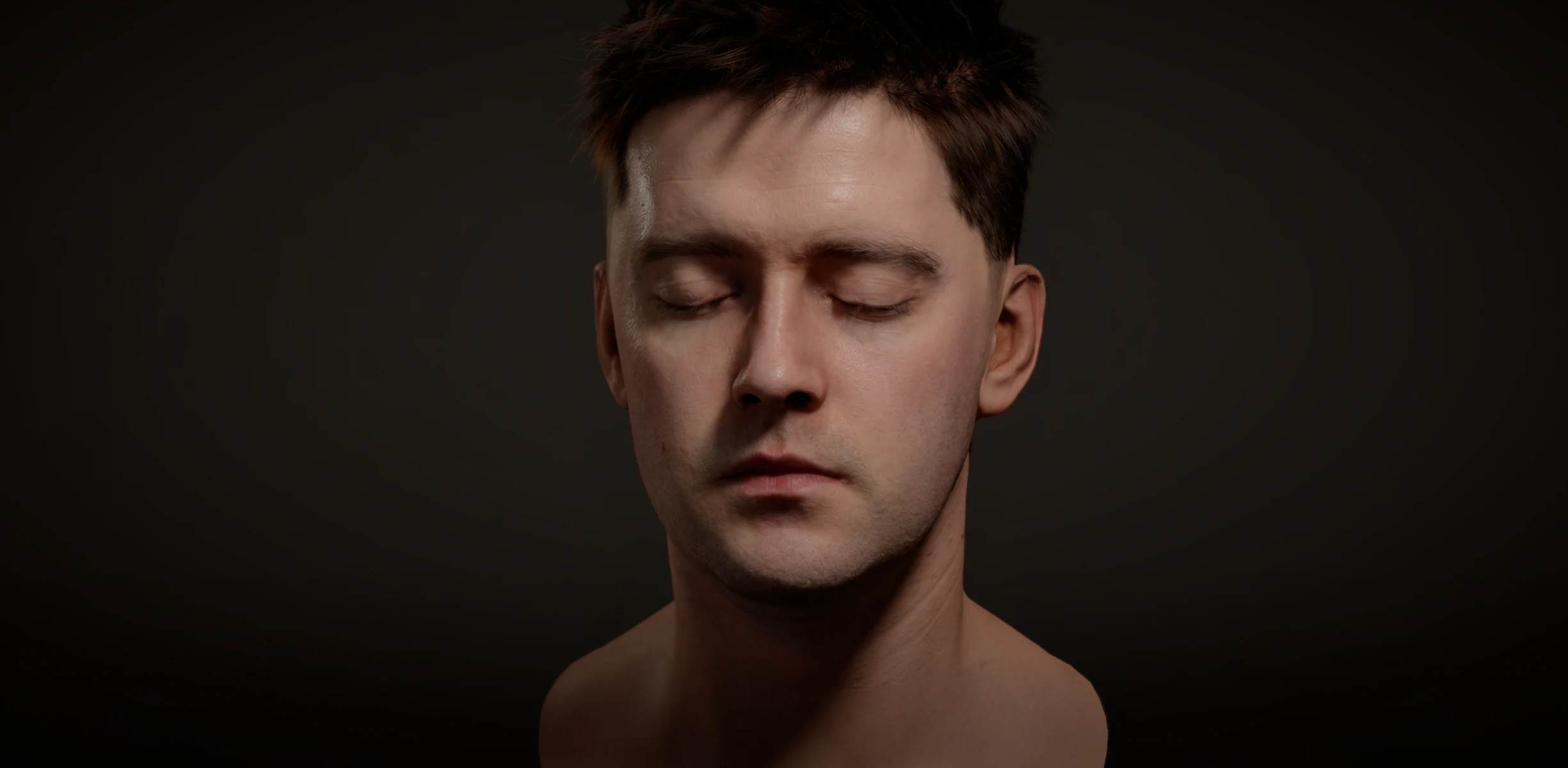
I designed the experiments and built the system from scratch, including a facial reconstruction pipeline and a custom rendering engine written in Rust. The pipeline recovered facial geometry and skin detail from photographs, and the renderer reproduced how light interacted with those features in 3D.
I built a facial rig around the subject’s recorded movements and paired it with a phonetic engine that coordinated lip movement with speech. An embedded conversational AI drew on the subject’s own material to generate responses in a synthesised version of their voice.
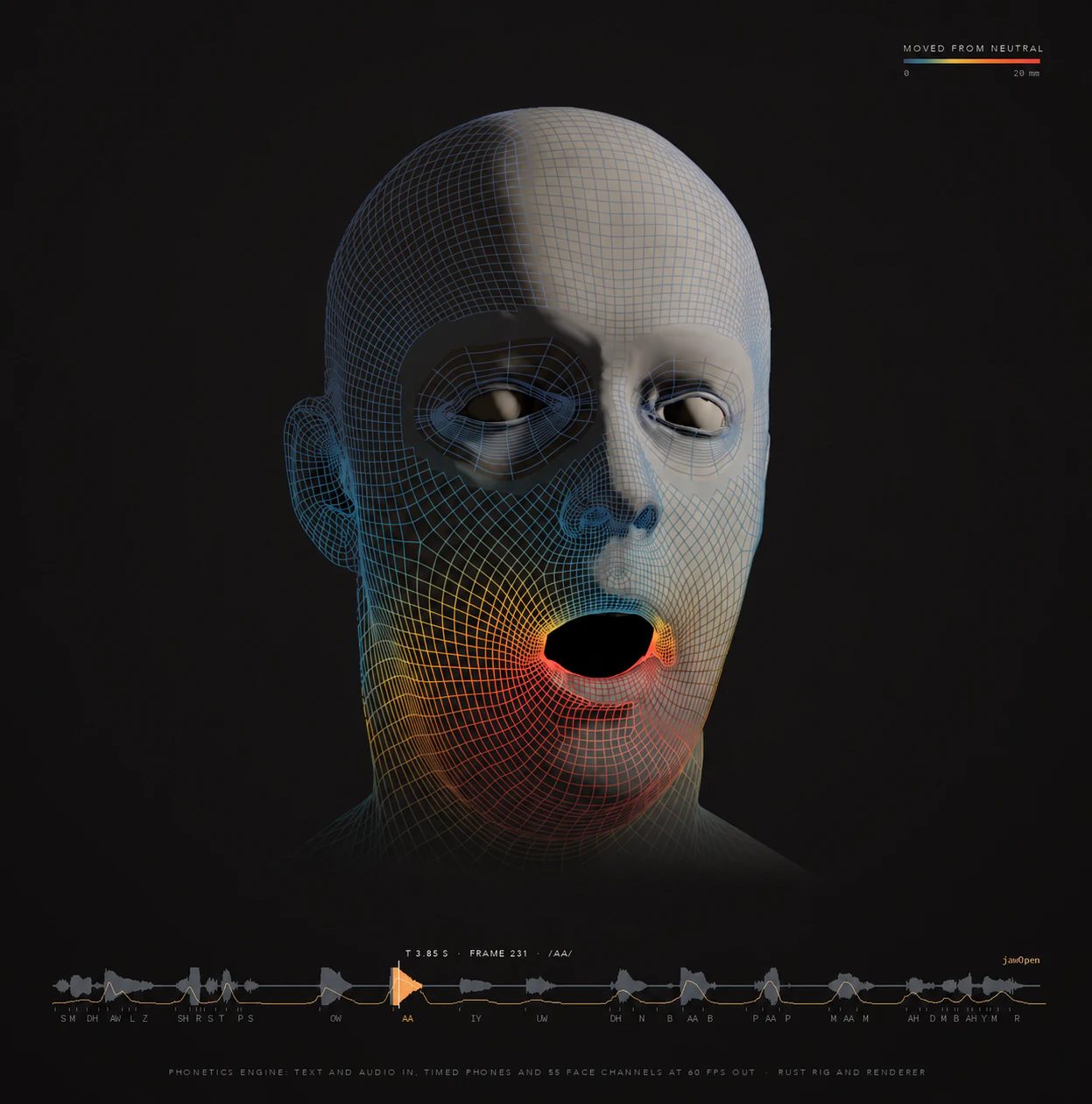
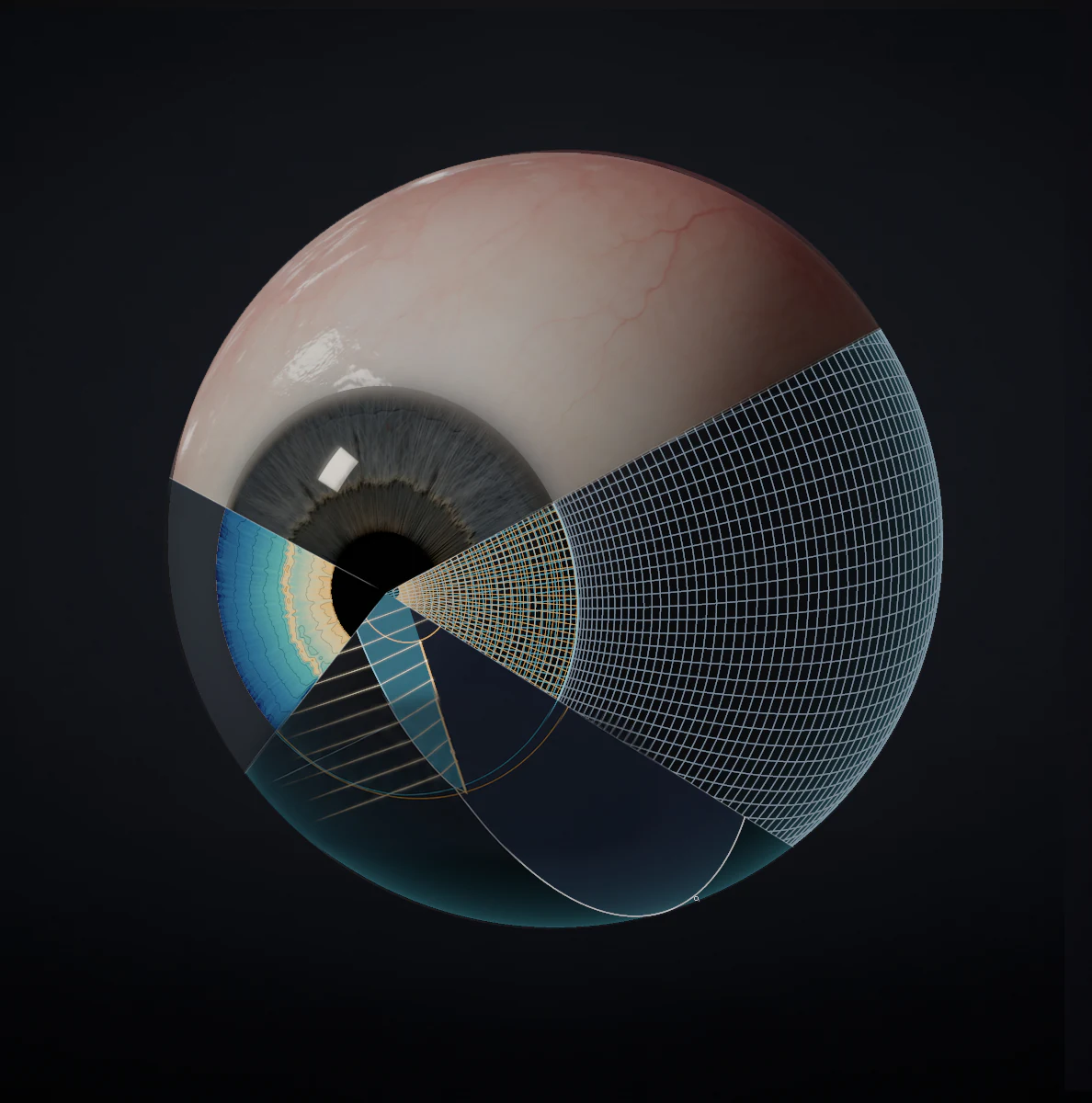
The result was a digital twin capable of live conversation in a browser. Reconstructed faces came within a millimetre of their measured shape. In conversation, each new response drove the twin’s voice and facial animation together, carrying the subject’s likeness from a captured performance into an exchange that had never been recorded.