Lexus: Spatially aware vehicle support through generative UI
As Lexus vehicles grew more complex, owners’ confidence in using them depended increasingly on the quality of guidance available after handover. In a stressful or unfamiliar situation, even accurate information could be difficult to act on if the owner had to work out how it applied to their particular vehicle. For Lexus Australia, the opportunity was to extend the expertise owners trusted at the dealership into everyday ownership, helping them understand their vehicle and decide what to do when it mattered most.
- Client
- Lexus
- Deliverables
- Working SoftwareProduct StrategyEvidence-Based InsightsBusiness Case
- Year
- 2026
- Role
- Strategy, Design, Engineering, Validation & Pitch
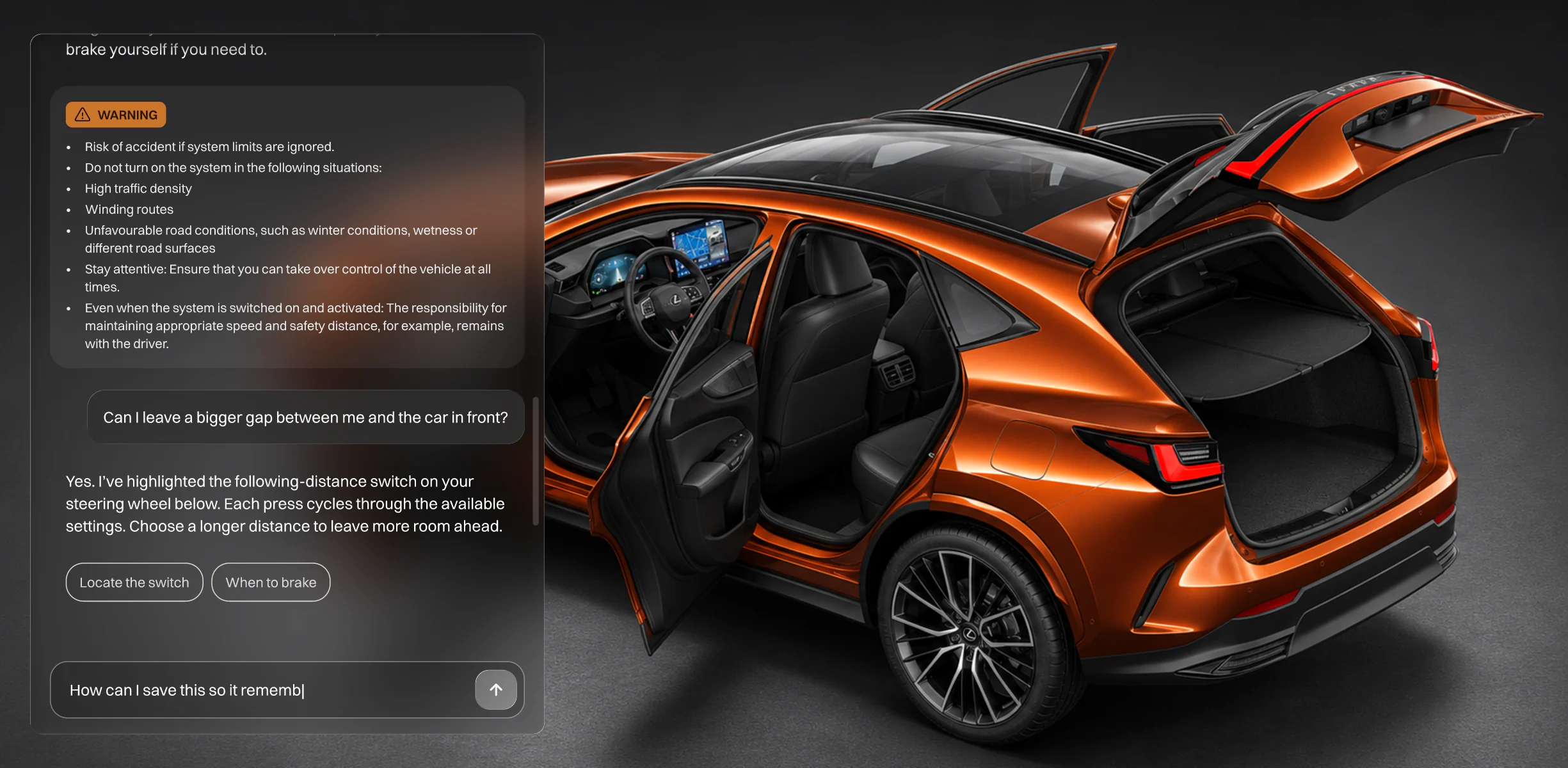
I led a series of experiments to test a hypothesis: connecting vehicle data to the situation an owner described could help them resolve problems more effectively than the support options they already used. I designed and built an AI support experience that drew on Lexus documentation and the configuration of each vehicle to generate personalised, accurate, spatially aware guidance.
I drew on my knowledge of vehicle subsystems, AI systems and 3D interaction design to give the concierge spatial awareness, so it could identify the component and procedure involved, show the owner where it was in their vehicle and explain what to do next.
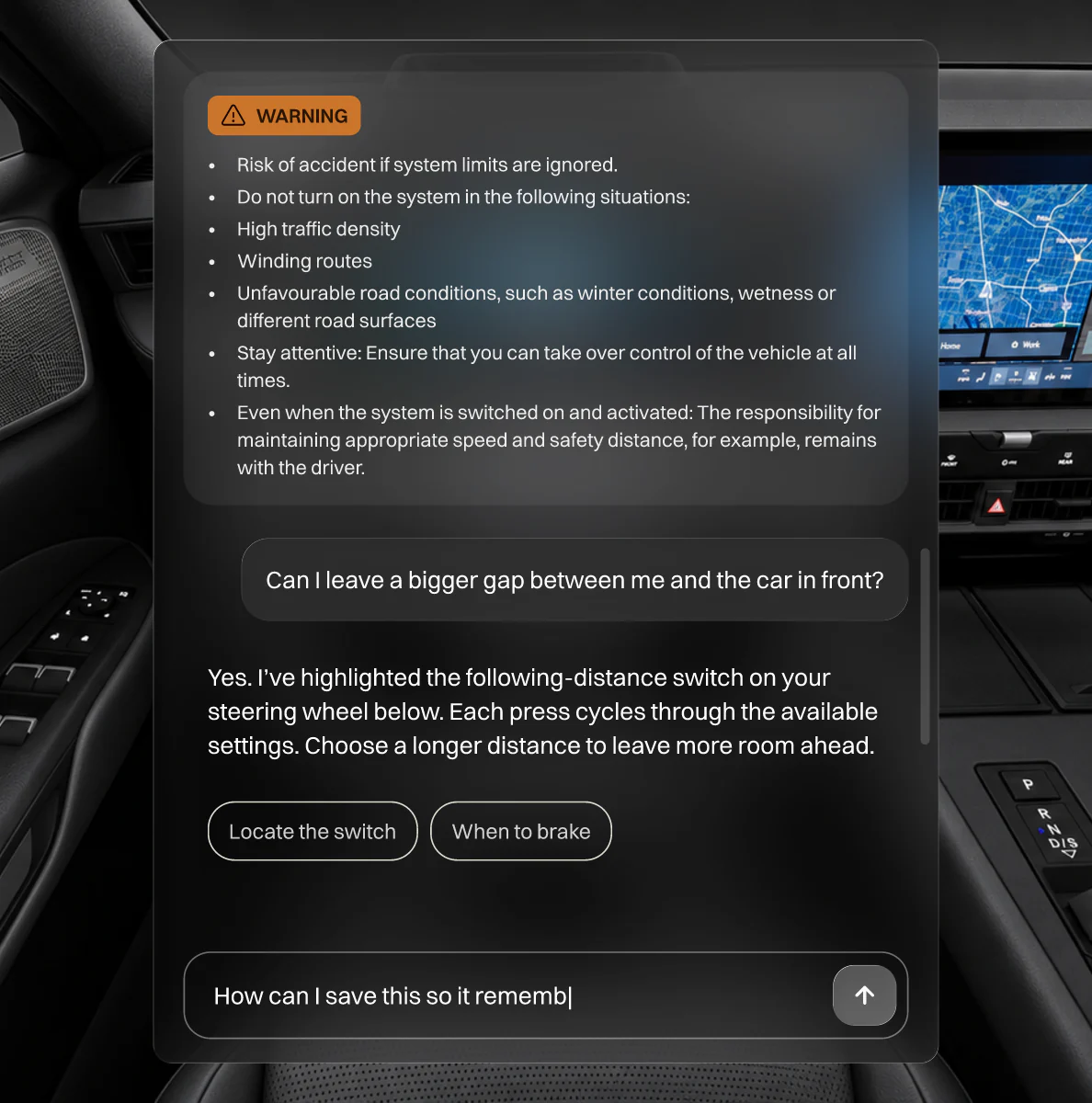
The concierge consistently gave Lexus owners accurate, vehicle-specific guidance they could act on with confidence. Owners could identify the relevant component, understand what to do next and resolve their issue without having to check another source. Several said they would turn to the concierge first for future questions and identified other situations where they wanted its guidance. That combination of demonstrated accuracy and clear intent to use the product gave Lexus the evidence to prioritise the concierge on its broader product roadmap.